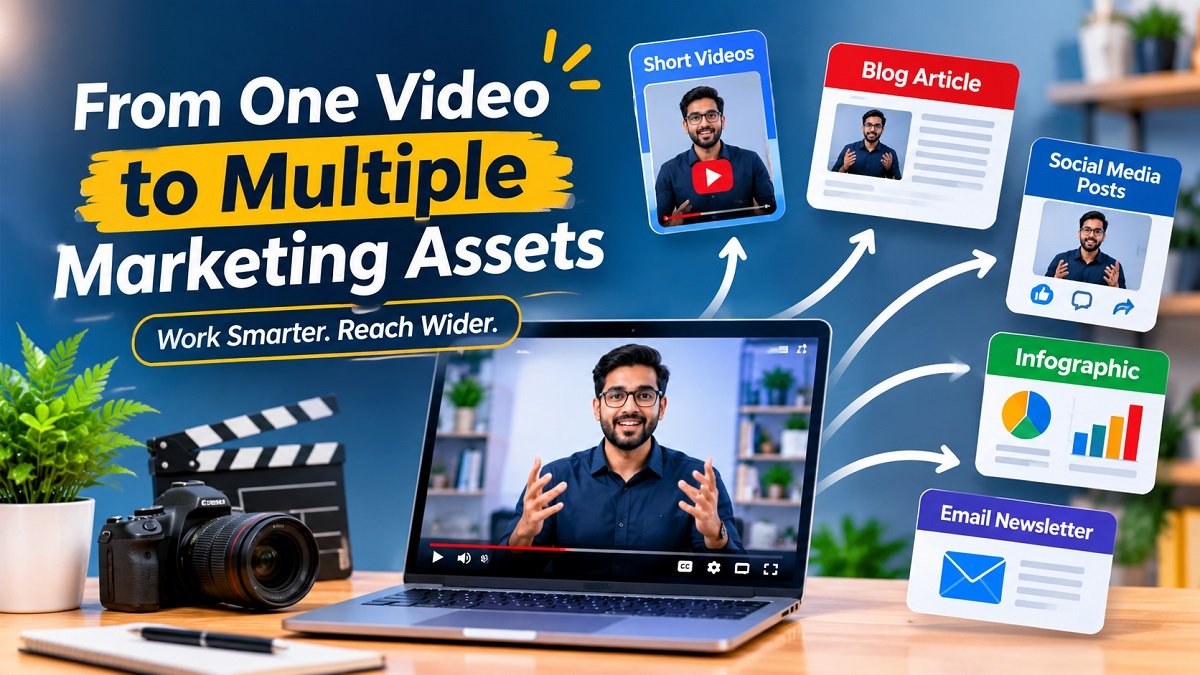
Creating high-quality video content takes time, creativity, planning, and resources. However, publishing a video once and then moving on to the next project can limit its marketing potential. This is where Video Content Repurposing becomes valuable. It allows businesses to transform one original video into multiple marketing assets, including social media clips, blog articles, short-form videos, email content, infographics, and promotional materials. Instead of creating something completely new for every platform, businesses can make better use of the content they already produce.
For brands looking to improve their content strategy, combining creative production with effective distribution is essential. Businesses can explore Holinex Academy’s Video Production Services to understand how professional video planning, filming, editing, and post-production can support their marketing efforts.
What Is Video Content Repurposing?
Video content repurposing is the process of taking an existing video and transforming its valuable information into different content formats for various marketing channels.
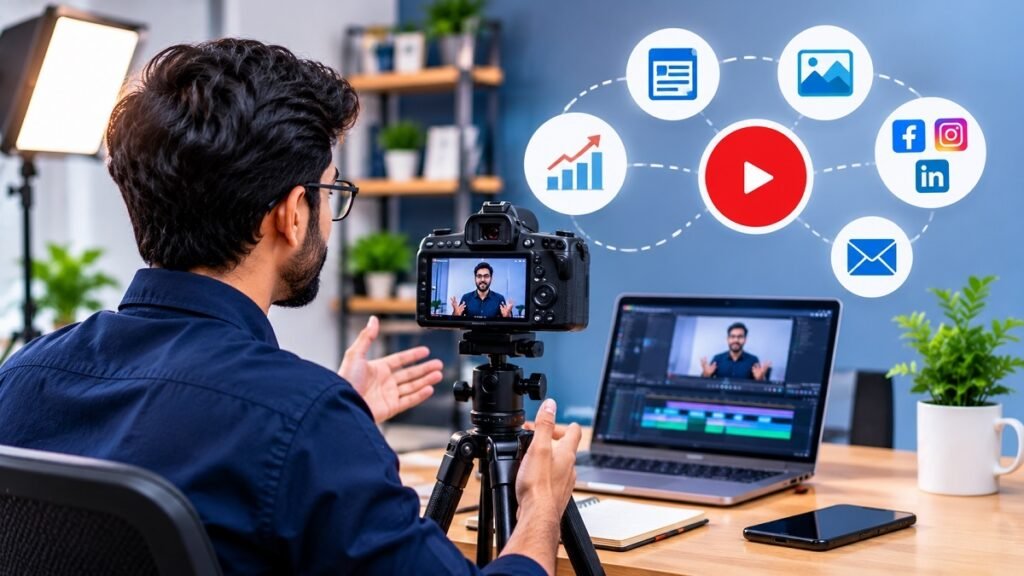
For example, একটি ব্যবসা যদি ১০ মিনিটের একটি educational video তৈরি করে, তাহলে সেই ভিডিও থেকে আরও অনেক ধরনের content তৈরি করা সম্ভব। The original video can become several short clips, a LinkedIn post, an Instagram Reel, a YouTube Short, a blog article, and even an email newsletter.
The objective is not simply to upload the same video everywhere. Instead, the goal is to present the original message in different ways so that audiences can consume it according to their preferences.
Some people prefer watching videos, while others enjoy reading articles or viewing short visual posts. Repurposing helps brands connect with these different audience groups without repeating the entire production process.
Why Businesses Need Video Content Repurposing
Producing new content continuously can become expensive and time-consuming. Businesses need a strategy that balances content quality, consistency, and production resources.
Video Content Repurposing offers several practical advantages.
1. Get More Value from Every Video
A professionally produced video contains multiple valuable elements, such as expert opinions, useful information, demonstrations, statistics, and storytelling.
Publishing it only once means many of those elements may never reach their full potential.
Instead, businesses can identify individual ideas within the video and turn them into separate content pieces.
For example, a product demonstration video might contain:
- A product introduction.
- Three important product benefits.
- A customer problem and its solution.
- A demonstration of product features.
- A customer testimonial.
Each section can become a separate marketing asset.
এভাবে একটি ভিডিও থেকেই কয়েকটি আলাদা কনটেন্ট তৈরি করা যায়, যেখানে প্রতিটি কনটেন্টের নিজস্ব উদ্দেশ্য থাকে।
2. Reach Different Audience Groups
Every audience does not consume content in the same way.
Some people watch long-form YouTube videos to understand a subject in detail. Others prefer short Instagram Reels or quick LinkedIn updates.
A single content format cannot always satisfy every audience preference.
By repurposing videos, businesses can distribute their core message through multiple formats and platforms.
For example:
- YouTube audiences may prefer detailed educational videos.
- Instagram users may engage with short visual clips.
- LinkedIn audiences may appreciate professional insights.
- Facebook audiences may respond to informative videos and discussion-based posts.
- Website visitors may prefer detailed articles supported by video content.
The original message stays consistent, but its presentation changes according to the platform.
3. Maintain a Consistent Content Schedule
Maintaining a regular publishing schedule is challenging for many businesses, especially those with small marketing teams.
Video repurposing can make content planning easier.
Instead of producing a completely new video every day, marketers can create several smaller assets from one well-planned production.
This helps businesses maintain a consistent online presence without putting unnecessary pressure on their production teams.
তবে নিয়মিত পোস্ট করার জন্য একই ভিডিও বারবার একইভাবে প্রকাশ করা উচিত নয়। প্রতিটি কনটেন্টে নতুন presentation, context অথবা useful information থাকা প্রয়োজন।
4. Improve Marketing Efficiency
Every new production requires planning, scripting, recording, editing, and approval.
Repurposing reduces the need to repeat these steps for every content format.
Although editing and adaptation still require effort, businesses can use existing footage, audio, transcripts, and visual elements to create additional assets.
As a result, marketing teams can spend more time improving distribution, audience engagement, and campaign performance.
How to Turn One Video into Multiple Marketing Assets
A successful repurposing strategy starts with understanding what the original video contains. এরপর সেই ভিডিওর বিভিন্ন অংশকে আলাদা marketing formats-এ রূপান্তর করতে হয়।
Here are some practical ways to do it.
1. Create Short-Form Videos from Long Videos
Short-form videos are useful for highlighting specific information from a longer production.
A 10-minute interview, tutorial, or educational video may contain several interesting moments that can work independently.
Editors can identify these moments and create:
- Instagram Reels.
- YouTube Shorts.
- Facebook Reels.
- TikTok videos.
- Short promotional clips.
For example, a digital marketing tutorial might explain five important marketing techniques. Each technique can become an individual short video.
The key is to make every clip understandable without requiring viewers to watch the original video first.
Add clear captions, an engaging opening, and suitable visual transitions to make the content easier to follow.
2. Transform Video Content into Blog Articles
A video can also become a valuable source of written content.
Suppose a company publishes an expert interview about social media marketing. The discussion can be transcribed and reorganized into a detailed blog article.
The written version may include:
- An introduction to the topic.
- Important discussion points.
- Practical examples.
- Expert recommendations.
- Frequently asked questions.
However, directly copying the transcript into a blog is not enough. The information should be reorganized for readers, with appropriate headings, explanations, and SEO optimization.
এই পদ্ধতিতে একই ভিডিও থেকে একটি searchable website resource তৈরি করা সম্ভব। Readers can understand the topic through the article, while video viewers can watch the original discussion.
3. Design Social Media Carousels and Infographics
Many videos contain information that can be communicated visually.
Important statistics, step-by-step instructions, key takeaways, and comparisons can be converted into carousel posts or infographics.
For example, a video explaining five common SEO mistakes can become a five-slide LinkedIn or Instagram carousel.
A simple structure could be:
- Slide 1: An attention-grabbing headline.
- Slide 2: The first SEO mistake.
- Slide 3: The second SEO mistake.
- Slide 4: Additional practical insights.
- Slide 5: A summary or actionable recommendation.
This approach makes educational information easier to scan and share.
4. Turn Video Highlights into LinkedIn Posts
Professional videos often contain valuable insights that can be transformed into LinkedIn content.
A business interview, webinar, or industry discussion may include important opinions, lessons, and practical recommendations.
Instead of sharing only the complete recording, marketers can extract one meaningful idea and build a professional post around it.
For example, a video discussing AI automation in business can generate separate LinkedIn posts about:
- Reducing repetitive tasks.
- Improving workflow efficiency.
- Managing business operations.
- Using AI tools responsibly.
- Improving team productivity.
Each post should provide meaningful context rather than simply repeating a sentence from the video.
5. Create Email Marketing Content
Email marketing is another useful distribution channel for repurposed video content.
A company can share a video highlight with its email subscribers and provide a short explanation of the main lesson.
For example, an educational brand can turn a recorded webinar into an email series.
The first email may introduce the topic, the second may share an important lesson, and the third may direct readers to the complete video or a related resource.
এতে একটি ভিডিওর তথ্য একাধিক communication touchpoint-এ ব্যবহার করা যায়। However, emails should offer additional value instead of sending the same promotional message repeatedly.
6. Develop YouTube Community Posts and Video Highlights
Long-form YouTube videos can generate content beyond the main video itself.
Marketers can extract important questions, interesting facts, and discussion points to create YouTube Community posts.
They can also prepare short teaser clips that encourage viewers to watch the complete video.
For example, a 15-minute business interview could produce:
- Two short video highlights.
- One audience poll.
- One discussion question.
- One behind-the-scenes post.
- One summary post.
This approach keeps the topic active on the channel between major video uploads.
A Practical Example: One Video, Seven Marketing Assets
Let’s consider a business that produces a 12-minute video about digital marketing strategies for small businesses.
Instead of publishing only the original recording, the marketing team can develop a complete content package.
| Original video element | Repurposed marketing asset |
|---|---|
| Full 12-minute video | YouTube video |
| Three key discussion points | Three short-form videos |
| Main educational information | Website blog article |
| Important tips | Social media carousel |
| Expert recommendation | LinkedIn post |
| Main talking points | Email newsletter |
| Key statistics and facts | Infographic |
This creates seven different content opportunities from one original production.
However, the exact number of assets will depend on the video’s length, quality, subject matter, and available information. Quality should always be more important than quantity.
Best Practices for Effective Video Content Repurposing
Repurposing does not automatically guarantee better marketing results. The process needs a clear strategy to ensure that each asset serves a specific purpose.
Understand the Purpose of Each Platform
Every platform has its own content environment and audience expectations.
A professional LinkedIn audience may appreciate industry insights, while Instagram users may respond better to visually engaging short videos.
Therefore, marketers should adapt the format, tone, length, and presentation before publishing.

Maintain Consistent Branding
Every repurposed asset should reflect the same brand identity.
Use consistent colours, fonts, logos, captions, and visual styles. This makes different content pieces recognizable even when they appear on separate platforms.
Avoid Repeating the Same Message
Repurposing should not become simple duplication.
A short video, blog article, and carousel should offer different ways to understand the same subject.
For example, a short clip can highlight a problem, while a blog article can explain its causes and solutions in detail.
Add Captions and Improve Accessibility
Captions help viewers understand video content, particularly when they watch without sound.
They also make important information easier to follow.
Use accurate subtitles, readable text, and appropriate formatting. Avoid placing captions where platform interface elements may cover them.
Measure Content Performance
Publishing multiple assets is only one part of the strategy. Businesses also need to evaluate how those assets perform.
Useful performance indicators include:
- Video views and average watch time.
- Audience retention.
- Social media engagement.
- Shares and saves.
- Website traffic.
- Email click-through rates.
- Leads and conversions.
Performance data helps identify which topics and formats deserve further investment.
Common Mistakes to Avoid When Repurposing Video Content
Some businesses focus only on increasing the number of posts. As a result, they may overlook content quality and audience experience.
Here are a few mistakes worth avoiding:
1. Publishing identical videos everywhere: Different platforms require different formats and presentation styles.
2. Ignoring video quality: Poor audio, unclear visuals, and inaccurate captions can reduce the effectiveness of repurposed content.
3. Removing important context: A short clip should communicate a complete and understandable idea.
4. Using irrelevant content formats: Not every video is suitable for every platform. Select formats according to the subject and audience.
5. Forgetting performance analysis: Without reviewing results, businesses cannot understand which assets are generating meaningful engagement.
6. Overlooking copyright and permissions: Ensure that footage, music, images, and third-party materials can legally be reused across the intended channels.
How Content Production Skills Support a Better Repurposing Strategy
Effective video repurposing requires more than basic editing knowledge. It combines storytelling, content planning, creative thinking, platform understanding, and technical production skills.
A content creator needs to identify valuable moments, understand audience interests, organize information, and present the same message in different formats.
Video editing skills help transform raw footage into engaging clips. Graphic design skills support carousel and infographic creation. Writing skills help convert spoken information into readable articles and captions.
These abilities work together to create a more organized content production workflow.
At Holinex Academy, practical content production learning includes video content, social media formats, visual storytelling, video editing, blog writing, and content repurposing. Developing these skills can help aspiring creators understand how a single idea can become multiple useful marketing assets.
Conclusion: Make Every Video Work Harder
Producing quality video content is an investment. Businesses should think beyond the initial publication and explore how the same production can support their wider marketing activities.
Video Content Repurposing makes this possible by transforming one original video into short-form clips, blog articles, social media posts, carousels, email content, and other valuable assets.
The real advantage is not simply producing more content. It is delivering the right information in the right format to the right audience.
With proper planning, creative editing, consistent branding, and performance analysis, businesses can build a more efficient and sustainable content marketing strategy.
Ultimately, one well-produced video can become the starting point for a much larger content ecosystem.
Frequently Asked Questions (FAQ)
1. What is video content repurposing?
Video content repurposing is the process of transforming an existing video into multiple content formats, such as short clips, blog articles, social media posts, carousels, and email newsletters.
2. Why is repurposing video content important for businesses?
It helps businesses get more value from existing productions, reach different audience groups, maintain a consistent publishing schedule, and use marketing resources more efficiently.
3. Can one video be used on multiple social media platforms?
Yes. One video can be adapted for YouTube, Facebook, Instagram, LinkedIn, and TikTok. However, its length, aspect ratio, captions, and presentation should be adjusted according to each platform.
4. What skills are required for video content repurposing?
Important skills include video editing, storytelling, content planning, graphic design, copywriting, audience research, and understanding different social media platforms.
5. Does video content repurposing improve SEO?
It can support SEO by helping businesses create related blog articles, improve content coverage, and attract visitors through different channels. However, repurposing alone does not guarantee higher search rankings. Each asset should provide original value and satisfy its audience’s needs.